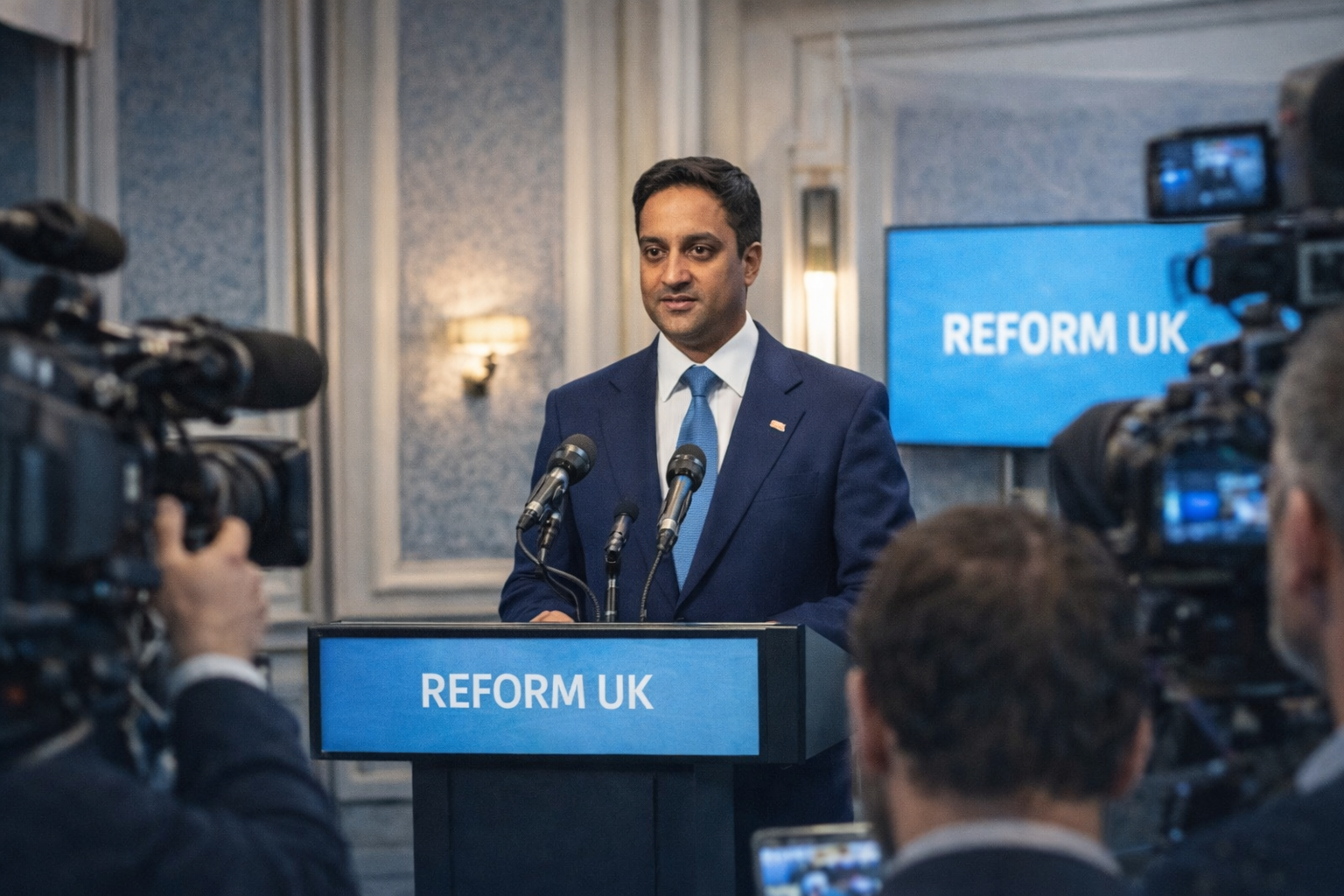
The British political party Reform UK has once again sparked controversy after proposing the suspension of visas for citizens from countries advocating for historical reparations related to slavery.
The position was defended by Zia Yusuf, a prominent figure within the party, who stated that “the bank is closed and the door is locked,” signalling a firm rejection of any form of financial compensation for historical injustices.
The proposal emerges at a time of growing international pressure, with several African and Caribbean nations intensifying calls for recognition, reparations, and historical justice regarding the long-term consequences of the transatlantic slave trade.
A debate beyond borders
Experts suggest that such a stance could heighten diplomatic tensions between the United Kingdom and countries that have been increasingly assertive in their narratives around historical reparations.
For many analysts, the issue extends far beyond financial compensation. It encompasses political recognition, historical accountability, and social justice.
Critics of the proposal argue that restricting visas risks being perceived as discriminatory, potentially penalising ordinary citizens for the political positions of their governments.
Impact on the African diaspora
For African communities in the United Kingdom, including the Angolan diaspora, the issue raises additional concerns.
The diaspora plays a vital role in building cultural and economic bridges, and any restrictive immigration measures could directly impact mobility, opportunities, and institutional relations.
Community organisations have emphasised the importance of dialogue over exclusion, advocating for constructive approaches that acknowledge the past while safeguarding future international cooperation.
Between history and contemporary politics
The debate on historical reparations continues to gain momentum globally, placing governments and institutions at a crossroads.
The central question remains: how can societies address the legacy of the past in a way that is fair, balanced, and forward-looking?